Gel polish has a reputation for ruining natural nails — but here is the truth most people never hear: it is rarely the gel that causes the damage. It is the removal. Gel cures into a hard, plastic-like layer bonded to your nail, and when it is ripped off incorrectly, it takes the top layers of your natural nail right along with it. Those thin, bendy, peeling nails people complain about after a gel manicure? That is almost always a removal injury, not a gel injury.
The good news is that safe removal at home is genuinely easy. It takes patience, not skill: file the seal, soak with acetone, and wait. The method below is the same soak-off technique nail technicians use in salons, and it works for regular gel polish, builder gel, and most soak-off overlays.
As an Amazon Associate I earn from qualifying purchases.
Prices change often on Amazon — the button under each product always takes you to the live price.
Why gel removal damages nails (and how to avoid it)
To understand the damage, it helps to know what gel polish is. Once cured under a lamp, gel becomes a solid polymer coating that is physically bonded to the surface of your nail plate. It cannot be wiped off with regular polish remover the way normal nail polish can — it has to be dissolved with pure acetone, and that dissolution takes time.
The damage happens when people skip the waiting. If you peel or pry at a gel manicure, the gel does not just lift away from the nail — the bond between the gel and the top layers of your nail plate is often stronger than the bond between the layers of the nail itself. So what separates is not the gel from the nail, but a layer of nail from the nail. Do that a few times and you end up with thin, flexible, splitting nails that take months to grow back out.
Never peel or pry: Never peel, pick, or pry off gel polish — not even a little loose corner. Peeling strips off layers of your natural nail plate and causes the exact thin, weak, peeling nails people blame on gel. If the gel is not lifting easily, it needs more soaking time, not more force.
What you will need
Before you start, gather everything so you are not walking around mid-soak with foil on your hands. You need: a coarse nail file (100/180 grit), pure acetone (100% acetone, not regular nail polish remover), cotton balls or pads, aluminum foil squares or reusable soak-off clips, an orangewood stick for gentle push-off, and cuticle oil for aftercare. A few dabs of a thick balm or oil on the skin around your nails is also worth doing — acetone is very drying on skin as well as nails.
The safe soak-off method, step by step
This is the classic foil wrap method. Set aside about 30 minutes and do not rush it.
- File off the shiny top layer. Using the 100-grit (coarse) side of your file, gently file the entire surface of each nail until the glossy top coat is gone and the surface looks dull and matte. This is the most-skipped step and the most important one: acetone cannot penetrate the sealed shiny layer, so if you skip filing, you will be soaking for ages with nothing happening. File just enough to break the seal — you are not trying to file off the color.
- Trim and protect. If your nails are long, clip them to your desired length first (removing gel is easier when there is less surface to deal with). Then apply a thin layer of balm or oil to the skin around each nail to shield it from the acetone.
- Soak cotton in pure acetone. Saturate a small piece of cotton or a lint-free pad in 100% pure acetone and place it directly on the nail. Regular "nail polish remover" — even acetone-based blends — is too weak and will make the soak take forever.
- Wrap with foil or clip on a soak-off cap. Wrap each fingertip snugly in a small square of aluminum foil to hold the acetone-soaked cotton in place, or use a reusable soak-off clip. The seal keeps the acetone from evaporating so it can do its work.
- Wait 10 to 15 minutes. This is the hard part: just wait. Check one nail after 10 minutes. If the gel looks wrinkled, lifted, or flaky at the edges, it is ready. If it still looks solid, re-wrap and give it another 5 to 10 minutes. Some gels and overlays take a full 20 minutes.
- Gently push off — never scrape hard. Remove the foil and use an orangewood stick to gently nudge the softened gel off the nail, starting from the cuticle end and moving toward the tip with light pressure. It should flake away easily. If any spot resists, stop, re-wrap that nail, and soak longer. Digging or scraping forces the exact damage you are trying to avoid.
- Clean up and assess. Wipe each nail with a fresh acetone-dampened pad to remove residue. If you see a few stubborn patches, a very light pass with a buffer smooths things out. Do not file the natural nail aggressively — a buffer only.
A note on builder gel and hard gel
Builder gel (and hard gel overlays) are much thicker than regular gel polish, so they need more prep before the soak. File down the bulk of the product — thin it out significantly with your coarse file before you wrap — otherwise you can be soaking for a very long time. The same rules apply: file, soak, wait, gently push. If a gel product will not budge at all after extended soaking, it may be a non-soak-off hard gel, which is designed to be filed off entirely rather than soaked. When in doubt, file instead of forcing it.
Aftercare: do not skip this part
Acetone dehydrates the nail plate and the surrounding skin — that dry, white, chalky look after soaking is normal, but your nails need rehydration to recover properly. As soon as you are done, massage cuticle oil into each nail and the surrounding skin, and keep applying it daily for the next few days. Your nails will feel rough for a day or two; that passes as moisture returns.
It is also worth giving your nails a short break before the next gel manicure, especially if you are a frequent gel wearer. Even one bare week with daily oil lets the nail plate rehydrate fully. If you must reapply right away, a hydrating base treatment under the gel helps protect the plate.
What you need for a safe removal
These are the basic supplies for the method described above — nothing fancy, just the right tools for the job.
Removal essential
ForPro
ForPro Professional Collection 100% Pure Acetone, Professional Nail Polish Remover for Natural, Artificial, Acrylic, and Sculptured Nails, Removes Gel Polish, Glue, and Glitter, 16 fl. oz.
A 16-ounce bottle of pure, undiluted acetone for soaking off gel polish at home. This is the strength you need for the soak-off method described above — regular blended removers are not strong enough to dissolve cured gel. A good fit for anyone who removes gel regularly and wants a salon-sized bottle.
Gentle pick
KINGMAS
KINGMAS 10 Pcs Gel Nail Polish Remover Clips, Plastic Acrylic Nail Art Remover Soak Off Wrap Cleaner Cap Clip
Reusable plastic clips that hold acetone-soaked pads against your nails in place of aluminum foil. They are easy to put on and take off, and ten clips covers a full set of fingers. A practical pick if you find foil wraps fiddly or want a mess-free soak you can reuse.
Removal essential
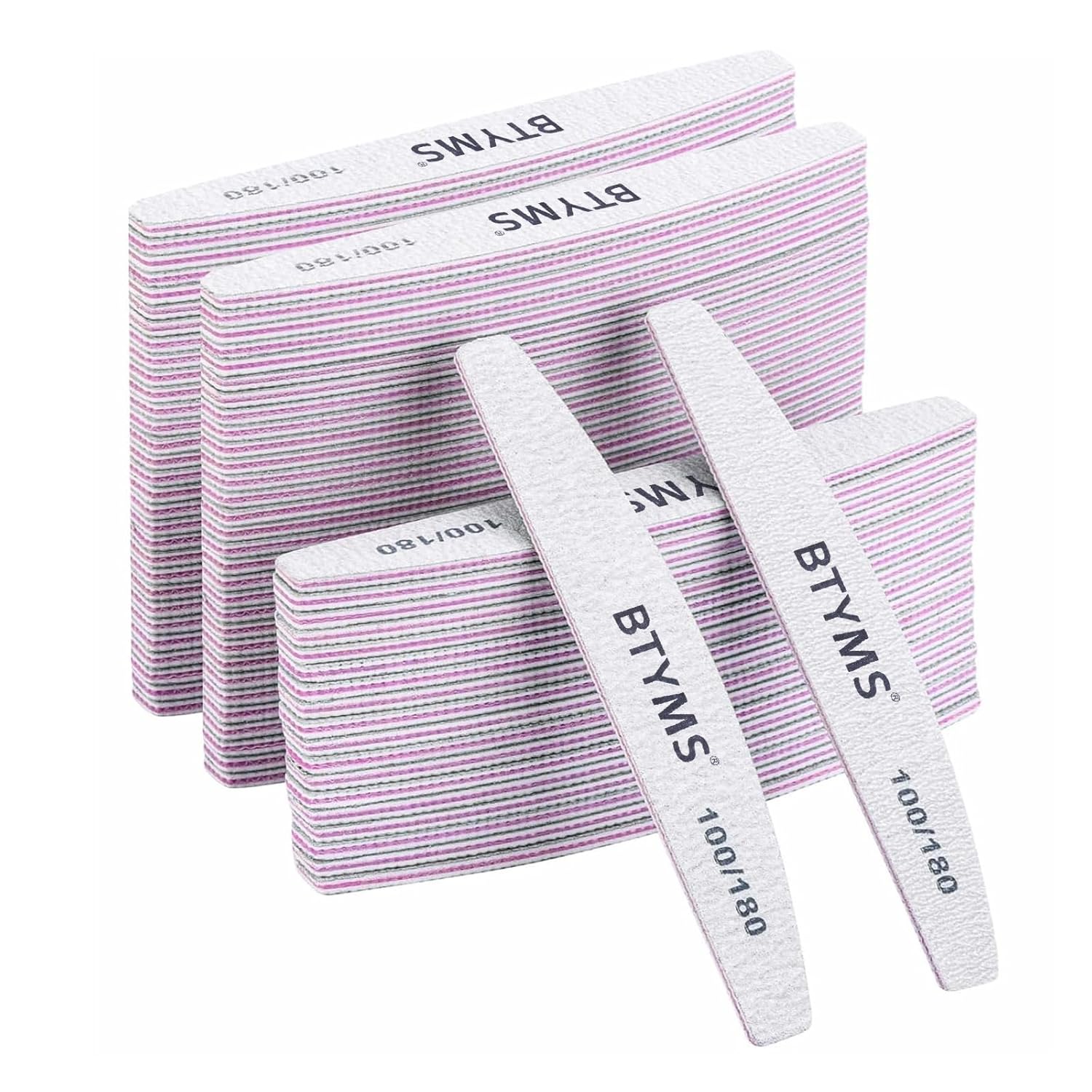
BTYMS
BTYMS 100Pcs 100/180 Grit Nail File and Buffer Professional Double-Sided Emery Boards for Acrylic, Gel & Natural Nails
Double-sided emery boards with a coarse 100-grit side for breaking the gel's shiny seal and a finer 180-grit side for shaping and smoothing. Filing the top coat first is the step that makes the acetone soak actually work. The bulk pack is handy for regular at-home removal.
Gentle pick
Borogo
Borogo 100 Pcs Orange Wood Nail Sticks Double Sided Multi Functional Cuticle Pusher Manicure Pedicure Tool for Manicure Pedicure
Double-ended wooden sticks with a flat end for gently nudging softened gel off the nail and a pointed end for cleaning around the edges. Wood is far gentler on the nail plate than a metal scraper, which matters during removal. Useful for cuticle care and nail art as well.
Aftercare must
Twinkled T
Twinkled T Nail Honey - Organic Nail Strengthening Treatment for Growth, Strength, & Moisture Nail Care Blend Cuticle Oil (Trio (Pen, Bottle, & Dropper))
A cuticle oil set in three formats — a twist pen, a bottle, and a dropper — made with a blend of organic plant oils. Acetone strips moisture from nails and skin, so a nourishing oil applied right after removal is the key aftercare step. The pen format is especially convenient for daily touch-ups.
How long should I soak gel nails in acetone?
Plan on 10 to 15 minutes for regular gel polish after filing the top coat. Thicker products like builder gel can need 20 minutes or more. If the gel is not lifting easily, soak longer rather than forcing it — resistance means it is not ready yet.
Can I use regular nail polish remover instead of pure acetone?
Not effectively. Regular remover is too weak to dissolve cured gel in a reasonable time, and you will end up scraping at a still-bonded coating — which is exactly how nails get damaged. Use 100% pure acetone for soak-offs.
Why are my nails thin and weak after gel?
In most cases, this is damage from peeling or scraping the gel off, which strips away layers of the natural nail plate. With a proper soak-off and gentle push-off, nails stay intact. The weakness usually grows out over a few months as the damaged nail is replaced.
Can I remove builder gel the same way?
Mostly yes, but file down the bulk of the product first — builder gel is much thicker, and soaking the full thickness takes very long. Some hard gels are non-soak-off by design and must be filed off entirely; if extended soaking does nothing, file instead of forcing it.
How soon can I get gel again after removing it?
Technically as soon as your nails are clean and dry. But after heavy or repeated gel wear, a short break of a few days to a week with daily cuticle oil lets the nail plate rehydrate and recover, which makes the next manicure look and last better.
File before you soak: The number-one reason home soak-offs fail is skipping the filing step. Acetone cannot dissolve the sealed shiny top coat, so always break that seal with a coarse file first — dull and matte is what you want.
When to stop and see a professional: If the gel will not soften after two full soaks, or if you notice pain, lifting of the natural nail, or discoloration underneath, do not keep forcing it. A nail technician can file off a stubborn overlay safely.




0 comments
Leave a comment