Somewhere between regular gel polish and full acrylics sits the product that has quietly taken over nail TikTok and salon menus alike: builder gel. Sold in a bottle with a brush, it goes on like polish but cures into a flexible, reinforcing layer that protects your natural nails while they grow out.
As an Amazon Associate I earn from qualifying purchases.
Prices change often on Amazon — the button under each product always takes you to the live price.
What Is Builder Gel (BIAB)?
BIAB stands for "Builder In A Bottle." Technically, it is the trademarked name of one brand's product, but on the internet it has become shorthand for the whole category: soak-off builder gels sold in a polish-style bottle with a built-in brush. These gels are thicker and more viscous than ordinary gel polish, and they self-level, meaning they settle into a smooth surface on their own instead of pooling or streaking.
Once cured under a UV or LED lamp, builder gel forms a protective shield over your natural nail. It does not dry in air, and it does not come off with regular nail polish remover — it has to be filed down or soaked off in acetone. That durability is the whole point: it guards weak or short nails against the breaks and splits that keep you starting over.
Builder Gel vs. Gel Polish vs. Acrylics
It helps to know exactly where builder gel sits, because it is often confused with both neighbors:
Regular gel polish is thin and flexible, applied in two or three color coats over a base. It looks lovely but adds almost no structure — if your nails are weak, they can still bend and snap underneath the polish.
Builder gel is the middle ground. It is a thicker gel used specifically to add strength and shape, usually finished with gel polish color or worn sheer on its own. It moves a little with the natural nail instead of feeling rigid, and it can be soaked off.
Acrylics are the heavyweight option: a liquid-and-powder system sculpted onto the nail (usually over tips or forms) that air-dries rock hard. Acrylics create dramatic length and strength, but they require more skill, more filing, and more chemicals at home — and they smell like a salon from across the street.
If what you want is stronger natural nails without the commitment or the fumes, builder gel is the sweet spot.
Who Is BIAB Actually For?
Builder gel shines for anyone growing out their natural nails. If yours break the moment they pass your fingertips, a builder overlay absorbs the daily knocks — typing, zippers, dishes — so the nail underneath keeps its length. People also love it for thin, peeling nails, for nails recovering after acrylic removal, and for busy hands that need a manicure to survive three to four weeks between appointments.
It is less ideal in a few cases. If you have a known gel or methacrylate allergy, skip it entirely — uncured gel on skin is how those allergies often develop, so keep every layer off your cuticles. Very active nail biters may do better addressing the habit first, since gel alone rarely survives determined chewing. And if you want extreme length or dramatic sculpted shapes right away, tips or acrylics are honestly the faster route.
Step-by-Step: Your First Builder Gel Application
Give yourself an unhurried hour for your first attempt. Rushing is the number-one cause of lumpy gel and flooded cuticles.
Step 1: Prep (this decides everything)
Push back your cuticles gently and remove any dead skin sitting on the nail plate. Lightly take the shine off the natural nail with a fine buffer — you are removing the glossy top layer, not thinning the nail. Wipe each nail with an alcohol-soaked lint-free pad or a dedicated nail cleanser so there is no oil or dust left. Lifting later is almost always a prep problem, not a product problem.
Step 2: Dehydrator and primer
Brush a thin coat of nail dehydrator over each nail and let it air-dry — it removes residual moisture so gel grips better. Follow with a thin coat of primer (an acid-free formula is the gentler choice for beginners), keeping both strictly on the nail and off the surrounding skin. Let the primer dry to a slightly tacky finish.
Step 3: The slip layer
Paint a very thin layer of builder gel over the nail, almost like a base coat, and cure it fully. This layer is just for adhesion — it should look translucent and a little streaky. Do not wipe it.
Step 4: Build the apex
This is the signature step. Pick up a small bead of builder gel on the brush, place it near the center of the nail, and let it self-level toward the edges — leave a hairline gap at the cuticle and sidewalls rather than flooding them. The thickest point should sit at the nail's stress area, roughly the middle of the nail, tapering thinner toward the tip and cuticle. That raised curve is the apex, and it is what gives builder gel its strength. If the gel creeps toward the skin, tilt your finger so the nail faces the floor for a few seconds and let gravity pull the gel back toward the center, then cure. Most bottles cure in about 60 to 90 seconds under an LED lamp — follow the exact time printed on your product, and cure every layer fully.
Step 5: Shape and finish
After curing, the gel may have a slightly tacky layer on top — that is normal and helps the next coat grip, so don't panic. Use a fine file to refine the edges, smooth any bumps, and perfect your shape. Wipe away dust, apply gel top coat, and cure fully. Finish with cuticle oil massaged around each nail once the manicure has cooled.
Infills vs. Full Removal
After about three to four weeks you will see growth at the cuticle. At that point you have two choices.
An infill is the routine maintenance option: file the surface lightly, push the old product back slightly, then apply a fresh bead of builder gel over the regrown area and re-sculpt the apex. You keep the same base structure and just rebalance it. Most people get two or three infills before a full removal.
A full removal means filing through the top coat and the bulk of the builder layer (stop before you touch your natural nail), then soaking the rest in acetone with foil wraps or clips until it softens enough to push off gently. Never peel or pry builder gel off — that tears the top layers of your natural nail with it. If residue resists, soak longer rather than scraping harder.
Realistic Expectations
Builder gel is a protective layer, not a growth treatment. It won't make nails grow faster — it just stops them breaking so the length you grow is the length you keep. Expect your first application to take a while and possibly look a little lumpy; self-leveling gel is forgiving, and the second set is always smoother.
With careful prep, three to four weeks of wear is a realistic target, though hands that are constantly in water or doing heavy work may need touch-ups sooner. If lifting shows up early, look at your prep first — oil, moisture, or gel on the skin are the usual culprits. And remember that any soak-off system is only as gentle as your removal: patient soaking keeps nails intact, peeling does the damage.
What You'll Need to Get Started
You don't need a salon's worth of equipment to begin — just these five essentials. Once you have them, each at-home set costs a fraction of a salon visit.
Beginner-friendly
modelones
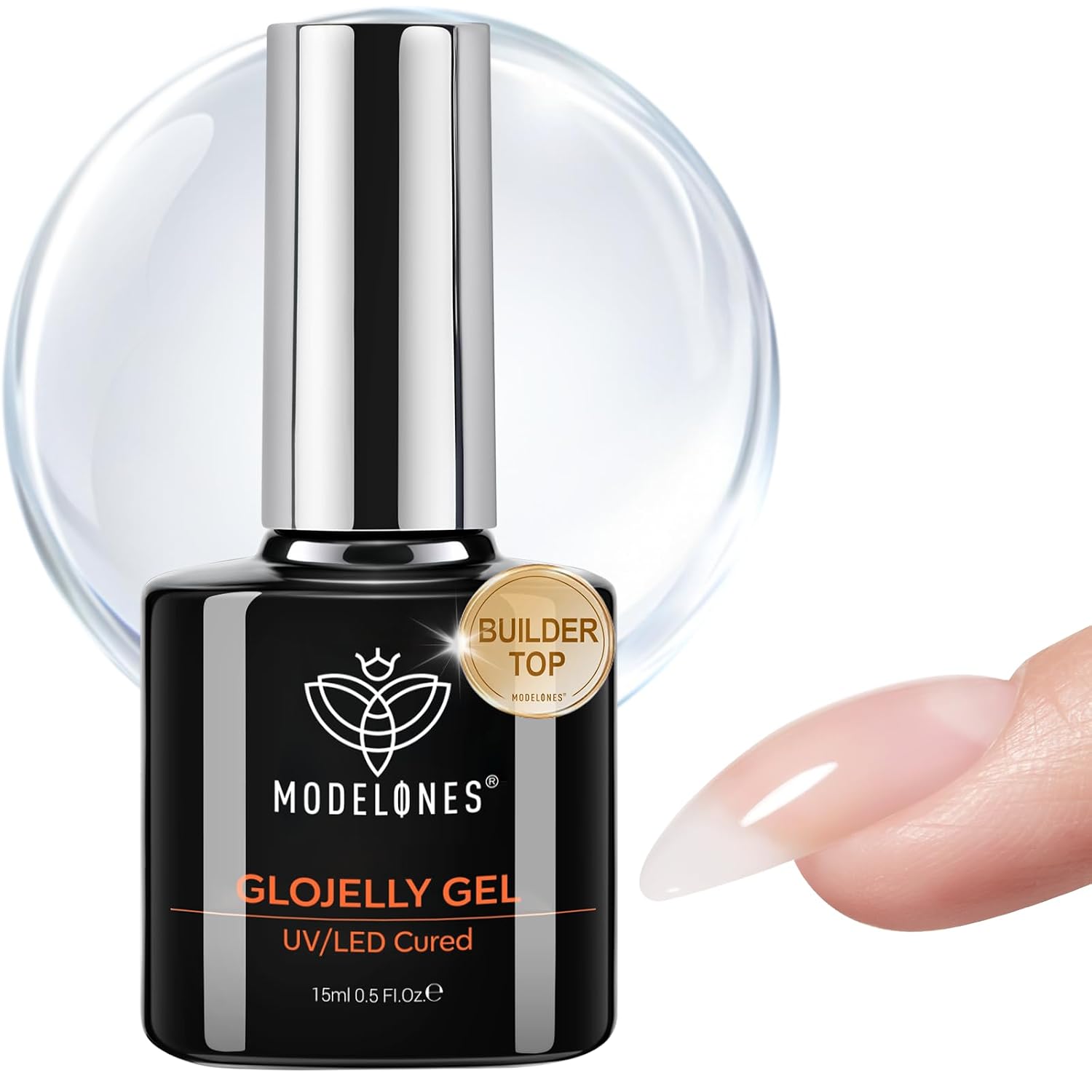
modelones Builder Nail Gel Top Coat 15 ML No Wipe for Cat Eye and Chrome Powder Ultra Gloss Clear Gel Polish Apex Building Nails Strengthener Extension Long Last Soak Off U V Manicure Gift for Women
A builder gel in a bottle from a well-known DIY nail brand, designed for apex building and reinforcing weak nails. It doubles as a no-wipe top coat, which means fewer bottles for a beginner to juggle. A sensible first builder gel if you want one product to cover structure and shine.
DIY essential
Fcozpjk
Fcozpjk UV LED Nail Lamp, 48W Nail Dryer for Gel Polish with 30 Beads 4 Timers Smart Sensor Fast Curing Home Manicure Professional Salon Nails Art Tools Supplies
A 48W UV/LED lamp with timer settings and an auto sensor that starts when your hand goes in. Builder gel must be fully cured to harden properly, so a reliable lamp is non-negotiable.
Prep essentials
modelones
modelones Nail Dehydrator and Primer with Gel Base & Top Coat Set, Acid Free Acrylic Supplies Primer Glossy Gel Nail Polish Top Coat
A prep and finishing set pairing an acid-free dehydrator and primer with a gel base and top coat. Good prep is what makes builder gel last the full three to four weeks.
Salon alternative
Canvalite
Canvalite Nail Files and Buffers, Shapes/Smooths/Shines Multi-Functional File & Polishing Buffing Block with 100/180 Grit Emery Boards, 14pcs Manicure Kit Natural Nail Care
A 14-piece set of dual-grit emery boards and multi-sided buffer blocks for shaping, smoothing, and prepping the nail plate. You'll reach for these constantly — prepping before gel, refining the apex after curing, and shaping during infills.
Editor's pick
CND
CND SolarOil Cuticle Oil, Natural Blend Of Jojoba, Vitamin E, Rice Bran and Sweet Almond Oils, Moisturizes and Conditions Skin, Pack Of 1, 0.25 Fl Oz
A salon staple from CND, made with a blend of jojoba, vitamin E, rice bran, and sweet almond oils to moisturize and condition skin around the nail. Daily oiling keeps the nail area flexible and is the simplest habit for keeping a builder gel manicure looking fresh between sets.
Is builder gel the same as BIAB?
BIAB ("Builder In A Bottle") is technically one brand's trademark, but it's now used online as shorthand for any soak-off builder gel sold in a polish-style bottle. Any product described as builder gel in a bottle works the same way for a beginner's purposes.
Can I remove builder gel at home?
Yes. File through the top coat and most of the builder layer, then soak in acetone with foil wraps or clips until the rest softens enough to push off gently. Never peel or pry it off — that's what damages the natural nail underneath.
How long does builder gel last?
With thorough prep, about three to four weeks before regrowth calls for an infill or removal. Hands in constant water or heavy manual work may see lifting sooner.
Is builder gel safe for my natural nails?
Applied and removed correctly, builder gel is one of the gentler enhancements because it soaks off rather than being filed down to the nail. Keep gel off your skin, cure every layer for the manufacturer's recommended time, and do a patch test if you have sensitive skin.
Do I need a UV/LED lamp for builder gel?
Yes — builder gel only hardens under a UV or LED lamp and will never dry in air. A 48W lamp is the standard recommendation for reliable curing.
Pro tip: If your builder gel looks lumpy after building the apex, don't add more gel — flip the hand upside down for 5 to 10 seconds before curing and let gravity smooth it out. Less product, better self-leveling.
Longevity tip: Wear gloves for dishes and cleaning, and oil your cuticles daily. The two fastest ways to lose a builder gel manicure are chemical soaking and dried-out cuticle area, and both are easy to prevent.
Safety note: Gel products must be cured for the full time printed on the bottle — under-cured gel can cause skin sensitivity or allergic reactions. Keep all uncured product off your skin and cuticles, and stop use immediately if you notice redness, itching, or burning.




0 comments
Leave a comment